How to Scale Personal Branding with AI Avatars: A Practical Workflow
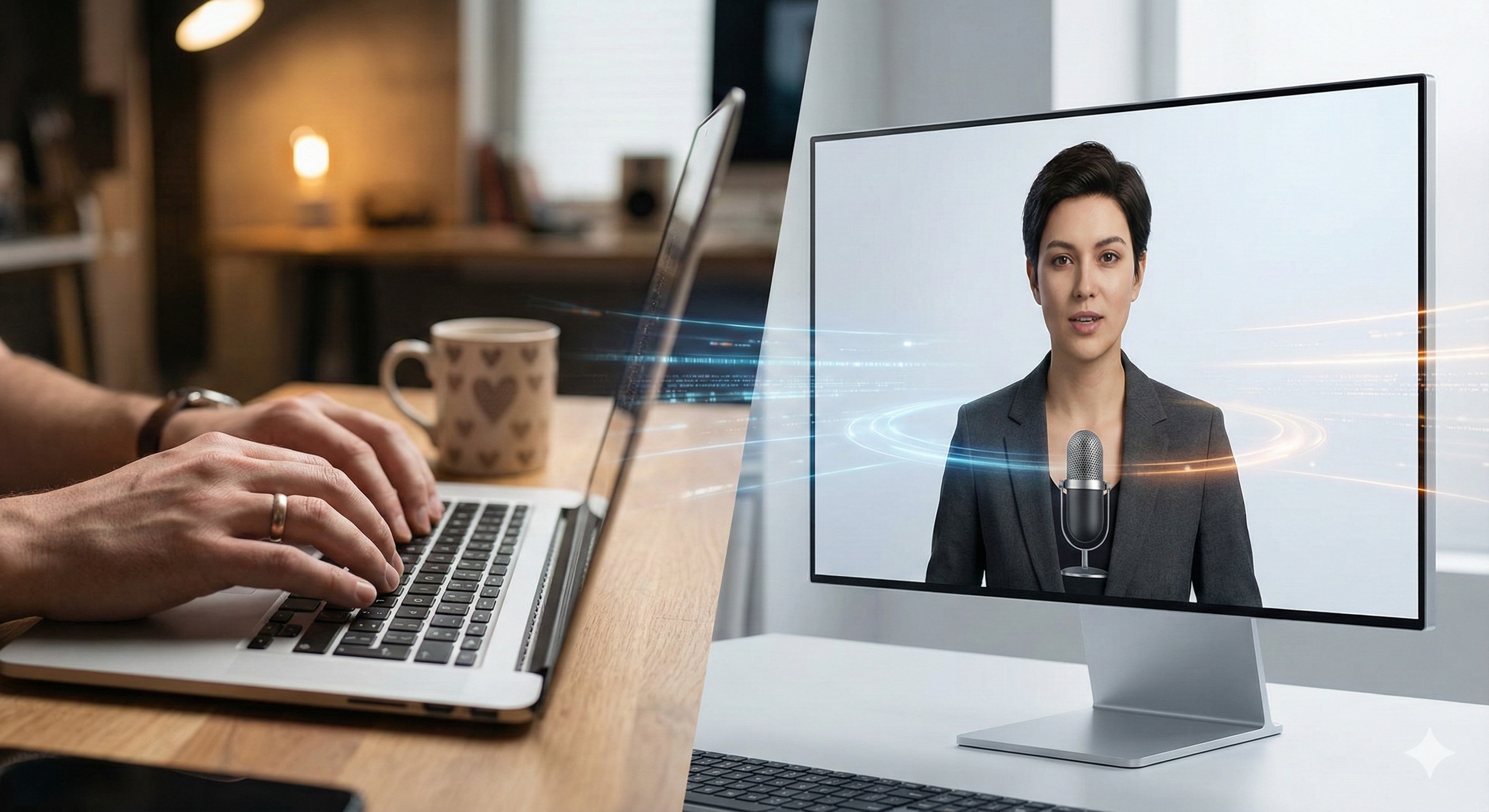
The Ultimate AI Video Tech Stack 2026: Clone Yourself in 4 Steps
Video is the most powerful medium for building trust and selling products online in 2026. Yet, for many writers, solopreneurs, and introverted creators, the friction of "getting on camera" stops the storytelling process before it even starts.
The lighting isn't right, the microphone echoes, you stumble over your words, or there simply isn't time in your day to record five takes of a simple 60-second update for your audience.
This is where the new wave of AI video tools shifts from a fun "novelty" to an absolute business "utility." We aren't talking about robotic, uncanny-valley figures anymore. By combining specialized AI tools, you can now produce high-quality, face-to-camera content without ever putting on makeup or hitting the record button.
Here is the practical, step-by-step workflow for building a video storytelling engine that runs on your script, not your schedule.
At a Glance: The "Digital Twin" Workflow
| Step | The Goal | The Recommended AI Tool |
|---|---|---|
| 1. The Script | Structure the narrative & hook | Jasper / Sudowrite |
| 2. The Voice | Generate raw emotional audio | ElevenLabs |
| 3. The Visuals | Clone your face & lip-sync | HeyGen |
| 4. The Edit | Add B-roll, music, & captions | InVideo AI |
Step 1: The Script (The Foundation)
No amount of high-tech 4K rendering will save a boring story. Before you open a video generation tool, your narrative needs to be incredibly tight.
Entrepreneurs often find that AI writing assistants are best used here not to write the final draft for you, but to structure your messy thoughts into a proven video format.
Read our full, deep-dive Jasper AI Review here
The Strategy: Do not ask your AI to simply "write a script." Ask it for a specific framework. Feed your rough notes into a tool like Jasper or Sudowrite and prompt: "Convert this blog post into a fast-paced, 60-second TikTok script. Include a 3-second visual hook, a clear value proposition, and a call-to-action at the end." ## Step 2: The Voice (ElevenLabs vs. Murf AI)
Audio quality is arguably more important than video quality. If the voice sounds robotic, stiff, or unnatural, the viewer will swipe away immediately. While video generators like HeyGen have built-in voices, pairing your visuals with a specialized audio engine drastically elevates the production value.
Read our full, deep-dive ElevenLabs Review here
- ElevenLabs: Currently the undisputed "gold standard" for emotive speech in 2026. It captures natural breaths, subtle pauses, and human inflection better than any other tool on the market.
- Murf AI: A very strong contender for those who need precise control over pitch and timing, specifically for corporate explainer videos where clarity and authority beat raw emotion.
The Pro Workflow: Generate your audio in ElevenLabs for maximum realism. You can even clone your own voice with a 1-minute audio sample. Download the high-quality MP3 file, and prepare to upload it directly into your video generator. This hybrid approach yields a vastly superior result than using an all-in-one platform.
Step 3: The Visuals (HeyGen)
Once the script and audio are ready, the visual element comes into play. HeyGen has emerged as the absolute leader in the creator space because of its relentless focus on photorealism, micro-expressions, and lip-sync accuracy.
Read our full, deep-dive HeyGen Review here
Unlike earlier iterations of AI avatars that looked like stiff video game characters, HeyGen allows for an "Instant Avatar." You upload a clean, well-lit 2-minute video of yourself speaking naturally to a camera. The AI clones your exact likeness, your hand gestures, and your specific facial mannerisms.
Why this matters: It creates brand consistency. You can create a specialized avatar for "Weekly News Updates" and another dressed more casually for "Deep Dive Tutorials." Your audience recognizes your face and builds a personal connection with you, even though the footage is synthetically generated from a text box while you sleep.
Step 4: The Assembly (InVideo AI)
A stationary "talking head" video—even a highly realistic AI one—can get boring after 15 seconds. To keep viewer retention high on platforms like YouTube and TikTok, the visual story needs to move.
Read our full, deep-dive InVideo AI Review here
InVideo AI acts as your final editing suite. By importing the raw avatar footage you exported from HeyGen, you can use InVideo to overlay cinematic B-roll, animated text captions, and background music. InVideo’s AI features can even "listen" to your ElevenLabs audio track and automatically suggest relevant stock clips to place over your avatar during key moments.
This layering process turns a static AI monologue into a dynamic, highly engaging narrative.
The Boring Truth: "Cost Stacking" & The Soul Factor
While these tools are incredibly powerful, they require management, and you need to go in with your eyes open.
- The "Soul" Factor: Even the absolute best AI avatars in 2026 struggle with high-energy, extreme emotions (like uncontrollable laughter or screaming anger). They work best for educational, calm, narrative, and professional content. If your brand relies on wild, chaotic energy, you still need a real camera.
- Cost Stacking: Running a premium software stack of Jasper (script), ElevenLabs (voice), HeyGen (video), and InVideo (editing) adds up quickly. You are looking at around $100 to $150 a month in subscription fees. It is a serious business investment, not a free shortcut. However, compared to hiring a freelance video editor and renting a studio, it is pennies on the dollar.
- Transparency Wins: Audiences value honesty. It is often a brilliant strategic move to actually tell your audience you are using AI. Frame it as "Meet my AI digital twin," rather than trying to trick the viewer. It builds trust and makes the technology a fun part of your brand story.
Frequently Asked Questions (FAQ)
Does my "Instant Avatar" look exactly like me? Yes, but the output is only as good as the input. If you record your 2-minute training video in a dark room with a blurry webcam, your AI clone will be dark and blurry. Film your training video in 4K with great lighting, and the results are indistinguishable from reality on a smartphone screen.
Is it difficult to sync the ElevenLabs audio with the HeyGen video? Not at all. When you upload your custom ElevenLabs MP3 into HeyGen, the HeyGen software automatically mathematically maps your avatar's lip movements to match the exact syllables of the audio file. It does the syncing for you.
Can I monetize these videos on YouTube? Yes. YouTube allows AI-generated content in its Partner Program as long as the underlying script provides original, valuable content to the viewer and does not violate spam or repetitive content policies.
The Verdict: Decouple Your Time from Your Output
The goal of this tech stack is not to replace you as a creator. The goal is to decouple your physical time from your content output.
By utilizing a master stack of HeyGen for visuals, ElevenLabs for audio, and InVideo for editing, solopreneurs can maintain a daily, high-quality video presence across all social media platforms while only actually "filming" once a year.
Next Step: Do not buy all of them at once. Start by testing the visual quality. Create a free account on HeyGen to build your "Instant Avatar" and see if it passes your personal quality check before investing in the rest of the stack.
Transparency Note: The Story & Script AI Directory is reader-supported. We may earn a commission if you purchase through our links.
Listings related to How to Scale Personal Branding with AI Avatars: A Practical Workflow

Elevenlabs
Is ElevenLabs the most realistic AI voice generator on the market? We tested its voice cloning and long-form storytelling features to see if it lives up to the hype.
Heygen
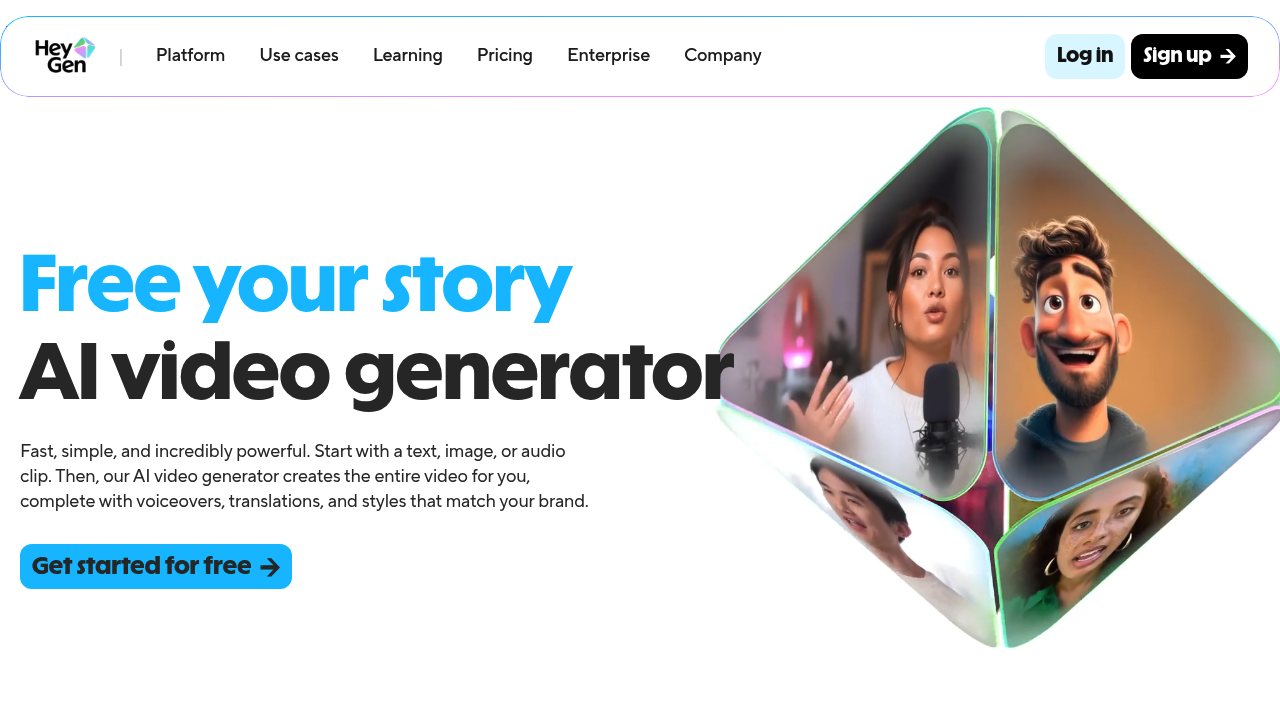
Turn your scripts into professional videos instantly. HeyGen removes the need for cameras by using realistic AI avatars. Perfect for writers and creators.

InVideo
Create & edit AI videos, AI Avatars, UGC product ads and much more!

Murf.ai
Realistic AI Voiceovers for Creators Who Don’t Want to Record Themselves