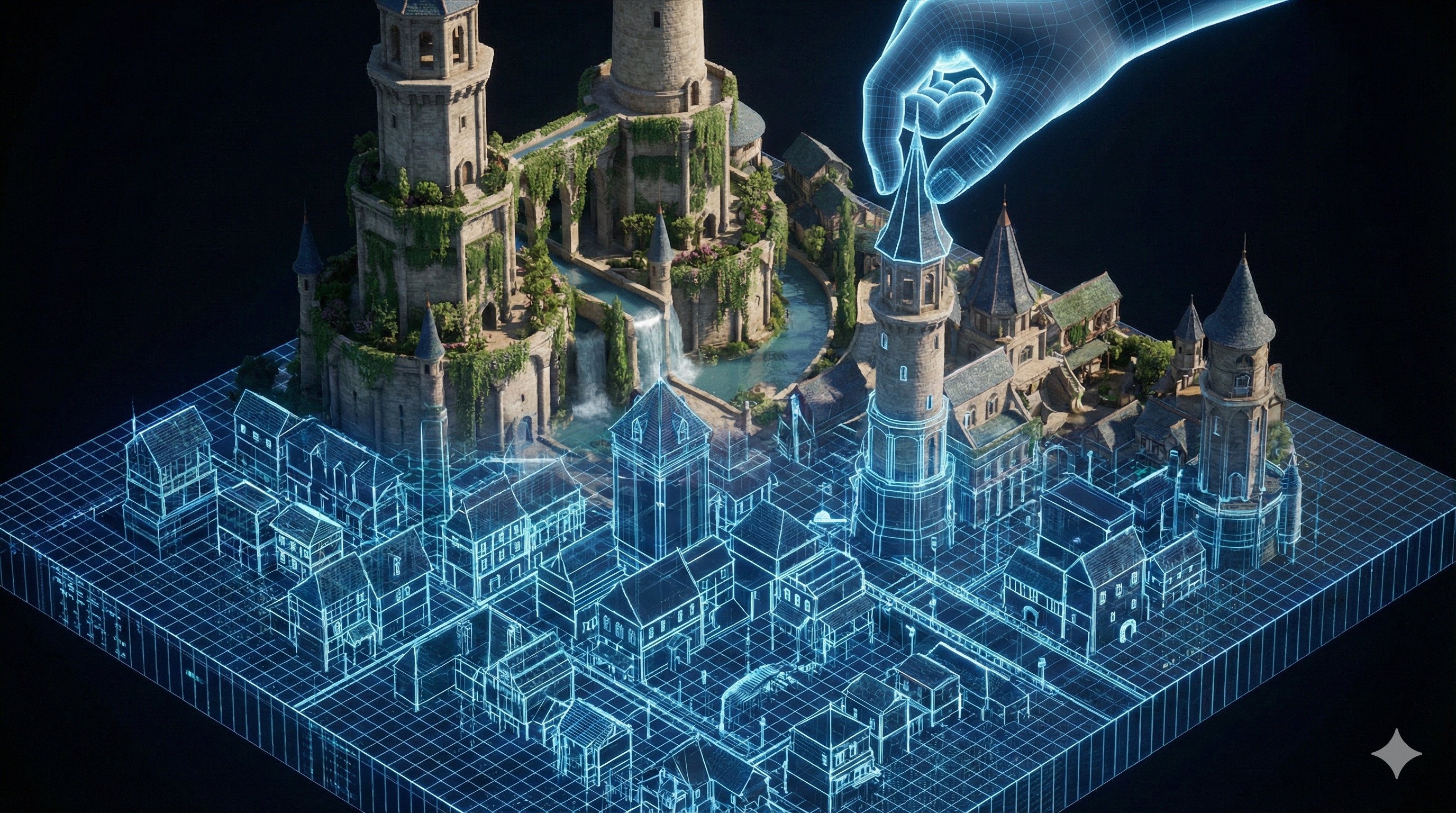
Keeping Your Story Straight: A Guide to AI World-Building and Consistency
Keeping Your AI Story Straight: The Ultimate Guide to World-Building in 2026
If you have ever tried to write a full-length, 80,000-word novel using AI, you have almost certainly slammed head-first into what writers call the Amnesia Problem.
In Chapter 1, your protagonist has piercing blue eyes and carries an ancient, rusted sword. By Chapter 4, the AI is absolutely convinced they have brown eyes and are wielding a laser pistol.
Large Language Models are incredible at generating beautiful prose, but they are notoriously bad at remembering context over long distances. For a marketer writing a short email, this amnesia doesn't matter. But for a storyteller building a complex universe, it breaks immersion immediately and creates hours of frustrating editing work.
The solution is not to write longer, more complicated prompts. The solution is structured data management — what professional indie authors call a Series Bible. Here is exactly how to build one so your AI never hallucinates a laser pistol again.
The two types of AI memory
To manage a complex story, you need to understand how AI writing tools actually hold information:
Context window (short-term memory). This is the AI's immediate memory — depending on the model, it can read back anywhere from 2,000 to 100,000 words. As your manuscript grows, the AI eventually loses the beginning of the book. It is not a bug. It is a fundamental architectural limit.
External memory (the Bible). This is where specialised storytelling tools completely outclass general chatbots like ChatGPT. Premium tools let you store permanent data — character traits, magic system rules, location descriptions — that gets injected into the AI's attention only when it is relevant to the current scene. Your protagonist always has blue eyes because you told the tool that once, permanently, and it never forgets.
Here is the exact workflow for setting this up correctly.
Step 1: Centralise your truth — the architect phase
Before you generate a single paragraph of prose, you need a single source of truth. Do not rely on your chat history to hold your world's facts. You need a dedicated planning tool that exists outside any AI writing session.
The tool: Plottr
Plottr is the industry standard for visual book planning. Before you open any AI writing tool, build your world here first.
- The Character Bible: Create a profile for every character. Document their physical description, their specific speech patterns — "speaks with a slight stutter when lying" — and their core motivations. Be specific. "Kind" is not useful. "Gives away food she cannot afford to spare, then lies about having eaten" is.
- The Setting Bible: Map your locations. Establish how long travel between locations takes, what each place smells like, and what the political reality is when your protagonist arrives.
Plottr acts as your master blueprint. When the AI gets confused later, you do not have to guess what the truth is. You check the file.
Step 2: Feed the engine — the drafting phase
Once your world exists in Plottr, you need to transfer that knowledge into an AI that actually writes the book. This is where most writers make their critical mistake: they copy their notes into a generic chatbot and wonder why it forgets everything three scenes later.
The tool: Sudowrite
Sudowrite is the most robust drafting tool for fiction writers available today, and its Story Bible feature is the reason serious novelists use it over everything else.
The Brain Dump. Take the high-level world concept you built in Plottr and paste it into Sudowrite's Brain Dump. This is the permanent foundation the AI references for every scene it generates.
Character boxes. Copy your character sheets from Plottr directly into Sudowrite's dedicated character fields. If you do not specifically tell Sudowrite that a character has a limp, it will write them sprinting up a flight of stairs. Once you add it to the character box, it never forgets.
The Lorebook. For complex, rules-heavy worlds — Sci-Fi, LitRPG, epic fantasy with intricate magic systems — Sudowrite's Lorebook feature works on trigger keys. You assign a key word, such as the name of your city or your magic system. Every time that word appears in your manuscript, Sudowrite automatically loads the relevant lore into its active memory for that scene. You do not have to paste anything. It just knows.
When you ask Sudowrite to write Chapter 12, it already knows the rules of your world, the eye colour of your protagonist, and exactly what the blue gemstone does in your magic system — because that information lives in the Bible, not in the chat history.
👉 Set up your Story Bible in Sudowrite
Step 3: Update as you go — dynamic world-building
The most common mistake amateur writers make is creating a static Series Bible at the start of the book and never touching it again.
Stories evolve. In Chapter 6 you decide on instinct that your magic system requires a rare blue gemstone to function. That instinct is good. What happens next determines whether Chapter 20 is coherent or a mess.
Stop writing immediately. Go straight to your Sudowrite Story Bible and your master Plottr file. Add the rule about the gemstone to both. Then keep writing.
When the gemstone becomes the focal point of your climax twenty chapters later, the AI will remember exactly how it works — because it is referencing your updated permanent data, not trying to reconstruct the logic from the last paragraph it read.
The discipline of updating the Bible in real time is the single habit that separates writers who finish novels from writers who abandon them at Chapter 15 when the continuity becomes unmanageable.
The boring truth: "show, don't tell" applies to your Bible too
The AI is only as smart as the data you feed into the Story Bible. When populating your world-building entries in Plottr or Sudowrite, avoid abstract adjectives.
Bad input: "The city is scary and dark." The AI will generate generic, atmospheric filler that could describe any city in any story.
Better input: "The city is covered in perpetual, choking smog. The neon streetlights flicker constantly and the cracked cobblestones are slick with motor oil. Residents wear cloth over their mouths outdoors and never make eye contact with strangers."
Concrete, sensory detail in your Bible produces concrete, immersive prose in your manuscript. The AI reflects exactly the quality of information you give it.
Frequently Asked Questions
Can I just use a Google Doc as my Series Bible? You can, but it is painfully slow in practice. Using a Google Doc alongside ChatGPT means manually copying and pasting the relevant character details into every single prompt before every single scene. Sudowrite automates this entirely — the Bible is always active in the background.
How detailed should my character entries be? As detailed as the character's role demands. A protagonist needs a full entry: physical description, speech patterns, emotional wounds, motivations, and arc. A minor character who appears in two scenes needs a name, a physical detail, and one behavioural quirk. Over-documenting minor characters wastes time you should spend writing.
Is Plottr an AI writing tool? No. Plottr is visual outlining and organisational software. It does not write prose. It builds the structural framework so that when you use an AI writing tool, the AI stays on track. Think of Plottr as the architect's blueprint and Sudowrite as the construction crew.
What if my world changes drastically mid-draft? Update the Bible before you write another word. A world that changes without a Bible update is a world that will contradict itself within three chapters. The ten minutes it takes to update the entry will save you hours of continuity editing later.
Final verdict: you are the navigator
AI is a powerful engine, but it needs a map you built. The quality of your story's continuity depends entirely on how disciplined you are with your world-building data before and during the draft.
If you are writing a quick standalone short story, you can manage with a general chatbot. But if you are building a trilogy, a series, or any novel with more than a handful of characters and locations, you need a system that actually respects your lore.
The two-tool stack that makes it work:
Transparency note: This site is reader-supported. If you click our link and make a purchase, we may earn a commission at no extra cost to you. We only recommend tools we have genuinely reviewed.
- 👉 Map the world first: Plottr — visual character bibles, location maps, and story structure before you write a word
- 👉 Write the book: Sudowrite — Story Bible, Lorebook, and prose generation that never forgets your world
Listings related to Keeping Your Story Straight: A Guide to AI World-Building and Consistency

NovelAI
Discover NovelAI — an AI-powered platform for writers and creators who want high-quality anime art, long-form fiction, worldbuilding, and character development tools.
Sudowrite
Boost your storytelling and scriptwriting with Sudowrite AI — brainstorm ideas, refine dialogue, and structure plots with ease.

Writesonic
Writesonic combines AI storytelling with SEO and research-backed recommendations, helping creators produce structured content that performs in search and engages audiences.

Jasper AI
Jasper AI helps creators draft blogs, scripts, and social content faster. Ideal for solopreneurs, marketers, and small teams.