Sudowrite vs. ChatGPT: Why Generic AI Fails at Fiction
Sudowrite vs. ChatGPT 2026: Why Generic AI Fails at Fiction
"Why should I pay for a specialized tool like Sudowrite when ChatGPT is free?"
If you are an aspiring author or screenwriter looking into AI software in 2026, this is almost certainly the first question you asked. And it is a completely fair one. ChatGPT (along with competitors like Claude) is an incredible miracle of technology. It is fantastic for writing corporate emails, summarizing PDFs, and coding software.
But if you have ever tried to sit down and write a full-length, 80,000-word novel with ChatGPT, you have likely run head-first into a wall of frustration. The characters sound flat, the plot forgets itself, and the prose sounds like it was written by a PR department.
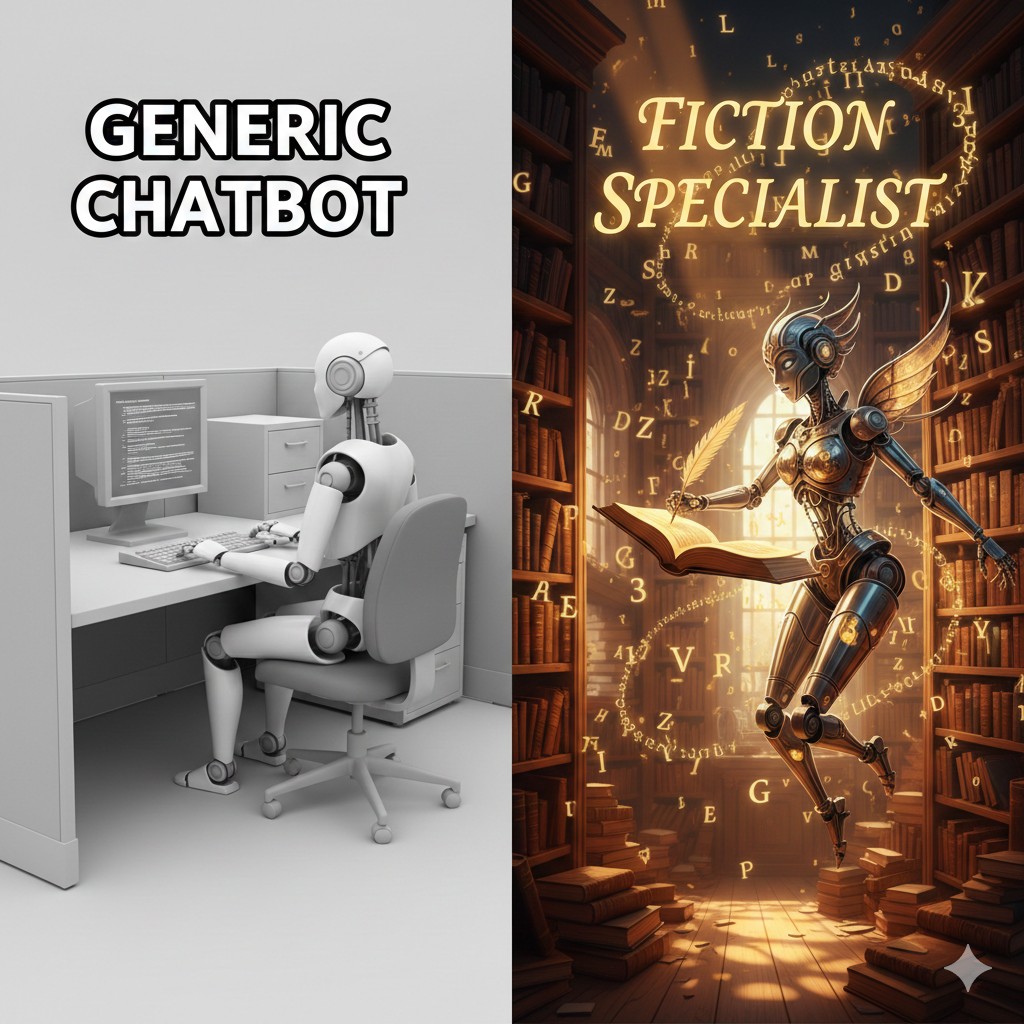
Here is the brutal truth: ChatGPT is a generalist assistant. Sudowrite is a specialist co-author. If you are serious about finishing your book this year, here is the honest, hype-free breakdown of why fiction writers are abandoning generic chatbots and making the switch to Sudowrite.
At a Glance: The Core Differences
| Feature | ChatGPT (Plus) | Sudowrite |
|---|---|---|
| Primary Design | Factual answers, coding, business | Creative fiction, screenwriting |
| Content Filters | Strict (The "HR Manager") | Lenient (Allows for dark/mature themes) |
| Long-Term Memory | Poor (Context drift over time) | Excellent (The "Story Bible" database) |
| Prose Style | Recognizable, generic "AI voice" | Highly customizable, literary prose |
| Interface | Blank chat box | Dedicated manuscript workspace |
1. The "HR Manager" Problem (Censorship)
Conflict is the heart of every good story. Without violence, dark themes, or intense romance, fiction becomes incredibly boring.
ChatGPT: Try to write a gritty fight scene in a thriller, a steamy chapter in a romance novel, or a villain doing something truly evil in a grimdark fantasy. ChatGPT will abruptly stop generating and lecture you: "I cannot generate content that promotes violence or non-consensual themes." It treats your fictional story as if it were reality. It is designed by OpenAI to be "brand safe" for corporate enterprise use, which makes it a terrible partner for writing compelling fiction.
Sudowrite: Read our full, deep-dive Sudowrite Review here. The creators of Sudowrite understand that fiction is not reality. Villains do bad things. Heroes get into bloody fights. Sudowrite utilizes unaligned and uncensored models (within legal limits) specifically so you can write the conflict necessary for a gripping story without being treated like a child by a digital HR manager.
2. The "Goldfish Memory" (Context Window)
ChatGPT: If you paste Chapter 1 into ChatGPT, it will remember the details perfectly. But by the time you reach Chapter 10, it has completely run out of "context memory." It forgets what happened in the beginning. Your protagonist's eye color will change from blue to brown, dead characters will magically walk back into the room, and carefully laid plot threads will vanish completely. You have to constantly remind it of the rules of your world.
Sudowrite: This is Sudowrite’s ultimate superpower. It features a tool called the Story Engine and the Story Bible. Instead of a long, scrolling chat, Sudowrite gives you a structured database. You input your characters, your magic system, your locations, and your genre rules into the Story Bible. Whenever the AI generates a new chapter—even if it is Chapter 40—it actively cross-references your Story Bible. It maintains strict narrative consistency over 100,000+ words in a way a generic chatbot simply cannot.
3. "Show, Don't Tell" (Sensory Details)
ChatGPT: If you ask ChatGPT to describe a creepy forest, it will usually say something like: "The forest was dark and ominous, evoking a profound sense of fear and mystery, a testament to nature's power." It tells the reader how to feel. It relies heavily on clichés and a very specific, recognizable "AI cadence." It sounds flat.
Sudowrite: Sudowrite has a dedicated "Describe" feature built directly into the text editor. You highlight the word "forest," and it generates options based strictly on the five human senses:
- Sight: "Emerald canopies filtering dappled, sickly-yellow sunlight..."
- Smell: "The suffocating scent of damp pine needles and decaying loam..."
- Sound: "The sharp, echoing snap of a dry twig underfoot..."
It forces the AI to show the scene rather than summarize it, creating the kind of immersive, page-turning prose that readers actually want to buy.
The Boring Truth: Pricing vs. Value
The "boring truth" is that ChatGPT is free (or $20/month for the Plus version), while Sudowrite is a premium SaaS product that requires a dedicated monthly subscription (often starting around $19-$29/month depending on your word count needs).
If you are just writing a hobby story for yourself and have zero budget, you can absolutely use ChatGPT. You will just have to spend a lot of time wrangling the prompts and editing out the "AI voice."
However, if you value your time, or if you plan to self-publish your novel on Amazon Kindle and need the prose to sound professional, Sudowrite pays for itself in the first week by saving you hours of frustrating editing.
Frequently Asked Questions (FAQ)
Can I write a novel using only ChatGPT? Yes, but it is incredibly tedious. You will have to write complex, 500-word "mega-prompts" for every single scene to keep the AI from going off the rails, and you will have to heavily edit the prose to make it sound human.
Do I own the copyright to the stories I write on Sudowrite? Yes. You retain 100% of the commercial rights and copyright to any original story you create and refine using Sudowrite's platform.
Can I use both tools together? Many professional authors do. They use ChatGPT (specifically the Voice feature on their phone) to brainstorm rough ideas while going for a walk, and then they feed those rough ideas into Sudowrite's Story Bible to actually write the manuscript.
Final Verdict: Which Should You Choose?
If you are brainstorming high-level ideas, outlining a marketing plan for your book, or writing a quick blog post, keep using ChatGPT. It is a fantastic, versatile tool.
But if you are writing a novel and you actually want to finish it this year with prose you are proud of? You need a tool built for the job.
- ChatGPT is like trying to write a book in a noisy corporate office with a polite stranger looking over your shoulder.
- Sudowrite is like writing in a private, distraction-free studio with a professional developmental editor.
Stop fighting the AI's filters and goldfish memory. Start actually writing your story.
Try Sudowrite for free and build your Story Engine here
Transparency Note: The Story & Script AI Directory is reader-supported. We may earn a commission if you allow us to guide you to a purchase.