ChatGPT vs. Specialized AI Story Tools in 2026: Are Sudowrite and NovelAI Worth the Money?
ChatGPT vs Specialised AI Writing Tools for Fiction (2026): Is It Worth Paying?
If you are a writer experimenting with AI in 2026, you almost certainly started with ChatGPT or Claude. It makes sense — they are easily accessible, incredibly versatile, and for the most part free.
You ask for a character name and it gives you ten. You ask for a quick scene beat and it writes a surprisingly decent paragraph.
But then the cracks appear.
Three chapters into your novel, ChatGPT suddenly forgets your protagonist's eye colour. It refuses to write a crucial conflict scene because it deems the villain's actions "too aggressive." Or it wraps up every single plot point with a cheesy, moralising summary that no reader would ever pay for.
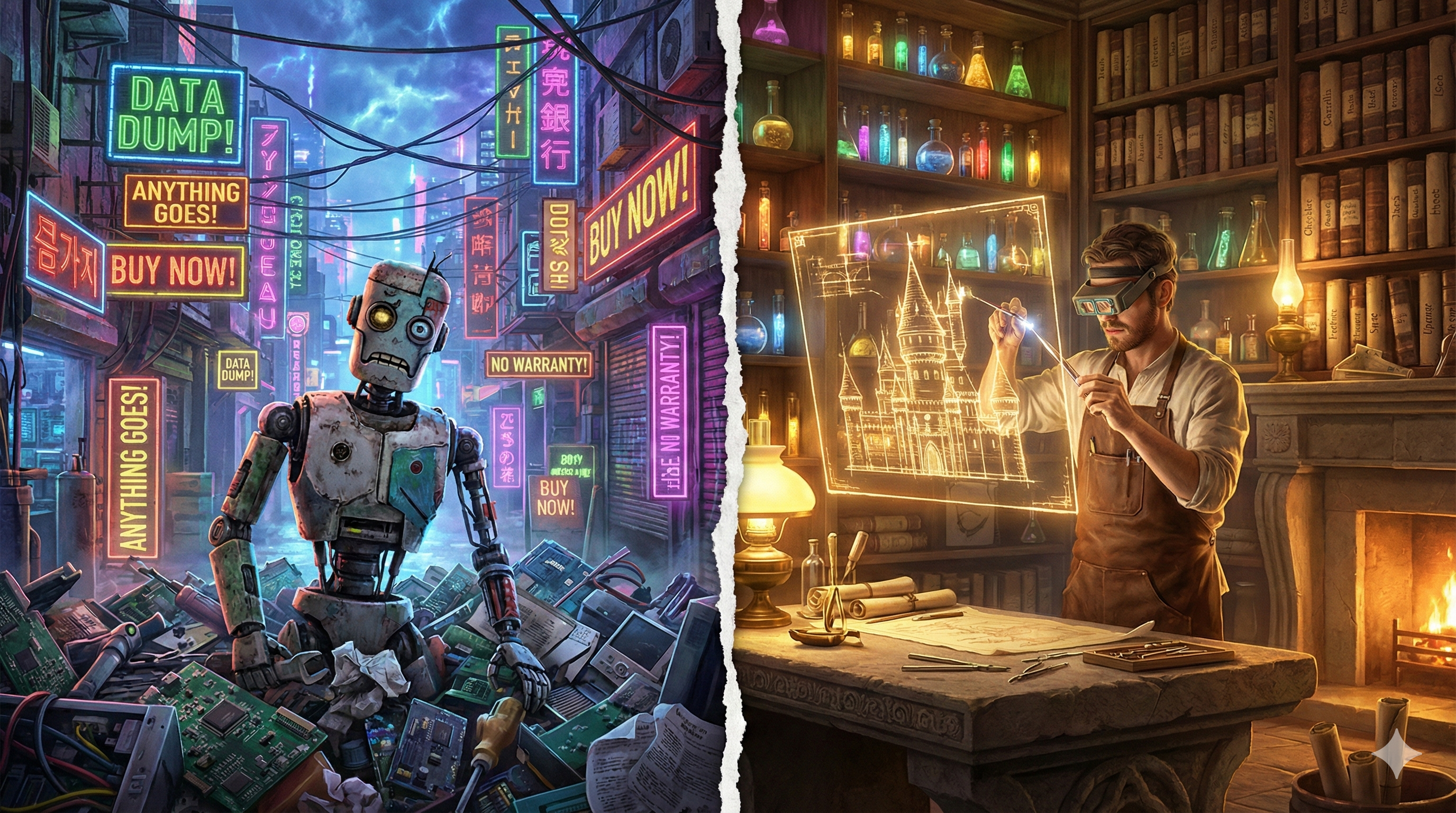
This is the Generalist Trap — and it catches almost every fiction writer who tries to use a general AI chatbot as a co-author.
The most common question frustrated authors ask is: is it actually worth paying for a specialised tool like Sudowrite or Squibler when ChatGPT exists for free?
The honest answer: yes, if you are serious about finishing a manuscript. Here is exactly why.
At a Glance: Generalists vs. Specialists
| ChatGPT Plus | Sudowrite | Squibler | |
|---|---|---|---|
| Primary design | Coding, emails, general tasks | Fiction, novels, screenplays | All-in-one manuscript workspace |
| Content filters | Strict — refuses dark themes | Lenient — allows mature themes | Lenient — allows mature themes |
| Long-term memory | Poor — context drift by chapter 5 | Excellent — Story Bible database | Moderate — project-based structure |
| Prose quality | Generic AI cadence, tells not shows | Literary, sensory, customisable | Clean, functional, momentum-focused |
| Fiction-specific tools | None | Story Engine, Describe, Rewrite | Smart Writer, timeline, word targets |
| Export to Kindle/PDF | No | No | Yes — one-click EPUB and PDF |
| Starting price | $20/month | ~$19/month | ~$16/month |
| Free trial | ✅ Limited | ✅ No credit card required | ✅ Yes |
Problem 1: The Content Filter (The HR Manager)
Conflict is the engine of every good story. Without tension, violence, moral complexity, or emotional intensity, fiction becomes a corporate memo. This is where ChatGPT fails fiction writers most visibly.
Try to write a gritty crime scene, a villain doing something genuinely evil, or a high-stakes romance chapter. ChatGPT will frequently interrupt with a refusal or sanitise the output into something toothless — treating your fictional story as if it were a real-world request. It is designed to be safe for enterprise use at massive scale, which makes it a poor partner for compelling fiction.
Sudowrite was built by published fiction authors who understood this frustration. Its models are tuned for creative writing, which means dark themes, morally complex characters, and genre-appropriate content — within legal limits — are handled without interruption. You write the story you intend to write.
Squibler takes a similar approach. Its Smart Writer generates scenes directly inside your manuscript editor without the corporate safety guardrails that slow down fiction writers.
Read our full Sudowrite review here Read our full Squibler review here
Problem 2: The Goldfish Memory (Context Drift)
Writing a novel is a months-long project. This is where the difference between a generalist AI and a specialist tool becomes impossible to ignore.
ChatGPT operates on a context window. It remembers everything in the current conversation — but the moment that window fills up, details start dropping. By chapter five, your protagonist's eye colour changes. By chapter ten, a character you killed in Act 1 reappears with no explanation. You spend as much time correcting the AI as you do actually writing.
Sudowrite solves this with its Story Bible — a structured database that runs alongside your manuscript. Before you start writing, you input your characters, world-building rules, magic systems, locations, and genre conventions. Every time Sudowrite generates a new scene, it cross-references the Story Bible. Chapter forty is as consistent as chapter one. This is Sudowrite's most important feature for long-form fiction.
Squibler addresses this differently — through project structure. Your manuscript is organised into folders, chapters, and scenes with their own notes attached. The AI generates content within that structure, keeping it contextually anchored to the section you are working on rather than relying on a scrolling chat history.
Problem 3: Show, Don't Tell
The most recognisable flaw in AI-generated fiction is what editors call "telling" — the AI summarises an emotion rather than creating it through sensory detail and action.
Ask ChatGPT to describe a sad character and it typically produces: "John felt a deep, overwhelming sadness as he looked out the window, realising the gravity of his choices." It tells the reader how to feel. It relies on abstractions rather than concrete sensory experience. After a few pages, the AI cadence becomes unmistakable.
Sudowrite has a dedicated Describe feature built into the manuscript editor. Highlight any noun — sadness, forest, first kiss, storm — and Sudowrite generates sensory descriptions broken into sight, smell, sound, taste, and touch. You select what works, weave it into the draft, and the result is immersive prose that shows rather than summarises.
The Rewrite feature takes it further. Highlight any flat paragraph and instruct Sudowrite to make it "more tense," "more melancholic," or "faster-paced." It rewrites with that emotional direction intact.
The Boring Truth: Time Is Money
ChatGPT is free — or $20/month for Plus. Sudowrite starts at ~$19/month. Squibler starts at ~$16/month.
On paper, the general AI wins on price. In practice, the maths shifts quickly.
If you spend three extra hours per week fighting content filters, reminding the AI of your character details, and editing the AI cadence out of your prose — that is twelve hours per month of frustration that a specialised tool eliminates. At any reasonable value of your time, $19/month pays for itself in the first week.
The "free" price tag of a general chatbot is only free if your time has no value.
The Pro Workflow: Use Both
You do not have to choose exclusively. The most efficient approach uses each tool for what it does best.
-
Brainstorming (ChatGPT) — use the free version or voice mode on your phone to bounce high-level plot ideas around, generate character name options, or work through a story problem conversationally. ChatGPT is genuinely excellent at this kind of exploratory thinking.
-
Structuring (Plottr or Squibler) — move your rough ideas into a visual outline. Plottr for timeline-based visual planning, or Squibler if you want to build the outline directly inside your drafting environment.
-
Drafting and prose (Sudowrite) — move your outline into Sudowrite's Story Bible and let the Story Engine generate consistent, literary prose chapter by chapter.
-
Editing and export — Squibler handles final formatting and one-click export to EPUB and PDF. Sudowrite outputs raw text that you take to your word processor of choice.
Frequently Asked Questions
Can I write a full publishable novel using only ChatGPT? Technically yes, but it is exhausting in practice. You will need long, detailed prompts for every scene, constant reminders about your characters and world rules, and heavy editing to remove the AI cadence. Most writers who try this switch to a specialised tool after hitting the consistency wall around chapter five.
Which is better for beginners — Sudowrite or Squibler? Squibler has a lower learning curve — you open a document, start typing, and the AI assists inline. Sudowrite's Story Bible is more powerful but requires upfront setup. If you want to start writing immediately, Squibler. If you want the best long-term prose results, Sudowrite.
What about NovelAI? NovelAI is a legitimate tool favoured by writers who need zero content restrictions — particularly in the grimdark fantasy and mature romance genres. It operates as a text-completion engine rather than a guided wizard, which means a steeper learning curve. It does not currently offer an affiliate program we can vouch for, so we cannot include it in our recommendations — but it is worth researching independently if maximum creative freedom is your priority.
Do I own the copyright to stories written with these tools? Yes. Both Sudowrite and Squibler's terms of service confirm you retain 100% of the commercial rights to content you create and refine on their platforms.
Can these tools handle screenwriting as well as novels? Sudowrite handles screenwriting well — the dialogue tools and scene generation work for scripts. Squibler has dedicated screenplay formatting built in, making it the stronger choice if formatting is a priority.
Final Verdict
Stop fighting the wrong tool. If you are using ChatGPT to write a novel and constantly battling its filters, correcting its memory lapses, and editing out its corporate tone — you are paying the price in time rather than money.
The specialised tools on this list exist because novelists built them to solve the exact problems that frustrate fiction writers when using general AI.
Choose Sudowrite if prose quality, narrative consistency, and creative freedom are your priorities. It is the tool most serious fiction writers use as their primary drafting engine.
Choose Squibler if finishing the manuscript is the priority — you need a disciplined structure, daily word count targets, and one-click publishing export.
Use both if you want the best of both worlds — Squibler for momentum and project management, Sudowrite for the scenes where prose quality really matters.
Transparency note: This site is reader-supported. If you click our link and make a purchase, we may earn a commission at no extra cost to you. We only recommend tools we have genuinely reviewed.
Listings related to ChatGPT vs. Specialized AI Story Tools in 2026: Are Sudowrite and NovelAI Worth the Money?

NovelAI
Discover NovelAI — an AI-powered platform for writers and creators who want high-quality anime art, long-form fiction, worldbuilding, and character development tools.
Sudowrite
Boost your storytelling and scriptwriting with Sudowrite AI — brainstorm ideas, refine dialogue, and structure plots with ease.

Grammarly
Grammarly is a writing assistant that helps you improve clarity, tone, and correctness in your text. It analyzes your writing in real time, highlighting grammar issues, awkward phrasing, and stylistic problems. It also offers suggestions for conciseness, readability, and tone adjustments, making it useful for emails, professional documents, academic writing, and everyday communication.

Jasper AI
Jasper AI helps creators draft blogs, scripts, and social content faster. Ideal for solopreneurs, marketers, and small teams.